Most healthcare practices don’t realise their billing process is underperforming because of one major event. Instead, the warning signs appear gradually. Maybe your denial rate is a little higher than usual, accounts receivable (AR) days keep increasing, or revenue isn’t growing even though you’re seeing more patients.
At first, these issues seem easy to explain. You might blame a difficult payer, staff turnover, coding updates, or a particularly busy month. While those factors can contribute, recurring problems often point to something bigger. When the same issues continue month after month, the real problem is usually an inefficient billing process rather than isolated incidents.
Recognising these patterns early can help protect your practice’s revenue before losses become much harder to recover.
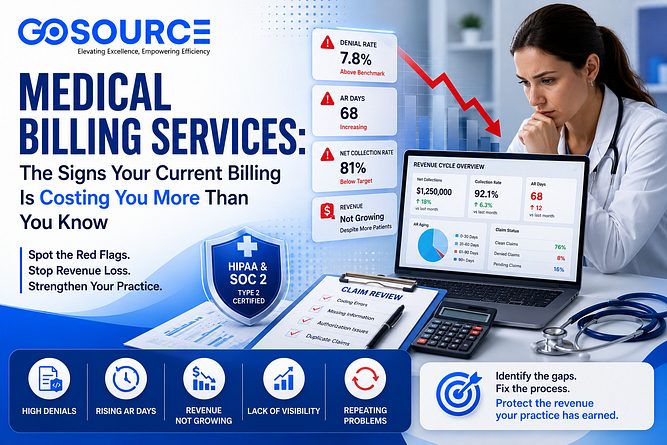
1. Your Denial Rate Stays Above 5%
A denial rate above 5% isn’t just an occasional setback. It usually signals a workflow issue.
Consistently high denials often mean claims are being submitted with missing information, coding errors, or authorization problems that should have been identified before submission. The concern isn’t one bad month. It’s when the denial rate remains high quarter after quarter, showing that the root cause has never been addressed.
2. AR Days Keep Increasing
Days in accounts receivable are one of the clearest indicators of revenue cycle performance.
If AR days continue climbing without a significant increase in claim volume, revenue is getting stuck somewhere in the process. Common reasons include delayed claim follow-ups, unresolved denials, or payment posting backlogs.
These issues may not create an immediate financial crisis, but the longer claims remain unresolved, the greater the risk of losing that revenue permanently.
3. Patient Volume Is Growing, but Revenue Isn’t
More patients should generally lead to more revenue. If that isn’t happening, your billing process deserves a closer look.
Missed charges, under-coded services, or payer underpayments often create a gap between the revenue your practice earned and the revenue it actually collects. In many cases, the problem isn’t reimbursement rates. It’s that the billing process failed to capture the full value of the services provided.
4. You Don’t Have Clear Billing Performance Data
Can your billing team answer questions like:
- What is your clean claim rate?
- What are your top denial reasons?
- How much of your AR is over 90 days?
- What is your current net collection rate?
If these answers aren’t readily available, your practice lacks visibility into its revenue cycle. Without consistent reporting, it’s difficult to identify problems early or measure whether billing performance is improving.
5. The Same Problems Keep Coming Back
A strong billing operation doesn’t just fix individual claims. It identifies why problems happen and prevents them from repeating.
If your team continues handling the same denial reasons, coding errors, or payer issues every month without addressing their underlying cause, the billing process has become reactive instead of proactive. Processing problems is not the same as solving them.
What Should You Do Next?
If these signs sound familiar, the good news is they’re fixable. The key is working with a billing partner that focuses on identifying root causes, improving workflows, and preventing future revenue loss instead of simply processing claims.
GoSourceMD is a HIPAA- and SOC 2 Type 2-certified medical billing and revenue cycle management company serving U.S. practices across specialties, including OB/GYN, cardiology, urgent care, gastroenterology, and mental health. Our team manages the entire revenue cycle with speciality-specific expertise, consistent KPI reporting, and a proactive denial prevention strategy designed to close the gaps that reactive billing often misses.
If you’ve noticed any of these warning signs, it’s worth taking a closer look at your billing performance.
Visit gosourcemd.com to connect with our team. Tell us what’s happening in your revenue cycle, and we’ll help you identify where the problems are coming from and what it would take to fix them.
No pressure. Just an honest conversation about protecting the revenue your practice has already earned.